Revision Knee Replacement
When a previous knee replacement hasn't delivered the outcome you deserve, Dr. Verma's expertise in complex revision surgery offers a path back to pain-free movement.
What Is Revision Knee Replacement?
Revision knee replacement involves removing and replacing a failed or painful prior knee implant. It is significantly more complex than primary knee replacement — requiring specialised implants, advanced surgical planning, and extensive experience with bone loss, scar tissue, and altered anatomy. Dr. Verma has performed hundreds of revision procedures, including cases referred after failed surgeries elsewhere.
Dr. Verma on Revision Knee Replacement
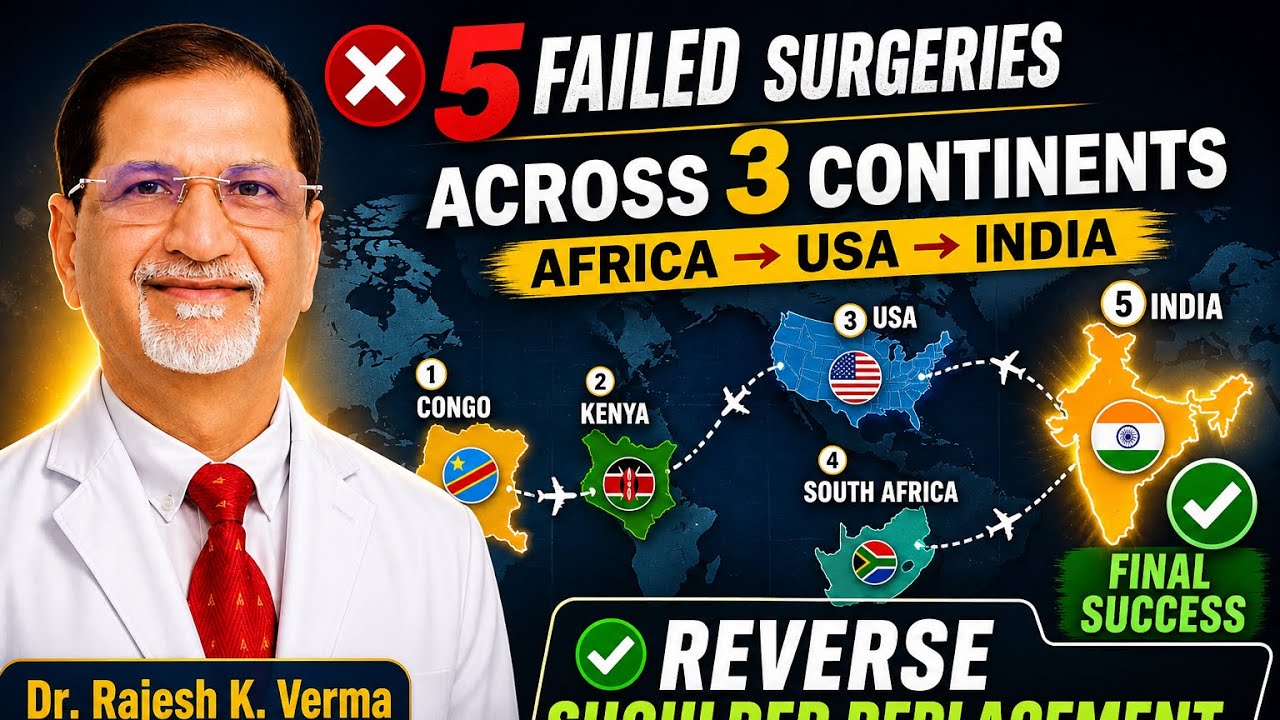
Hear directly from Dr. Rajesh Verma about when revision surgery is needed and what it involves.
Watch on YouTube
Revision Knee Replacement — Dr. Rajesh Verma
Why Revision Surgery May Be Needed
Implant Loosening
The implant has become loose from the bone over time, causing pain and instability.
Infection
Deep joint infection requires removal of the implant, treatment, and re-implantation.
Instability
Ligament imbalance or poor alignment causes the knee to feel unstable or give way.
Stiffness
Excessive scar tissue or poor implant positioning limits range of motion.
Wear & Fracture
Implant wear, polyethylene failure, or periprosthetic fracture around the implant.
Incorrect Alignment
Mechanical or kinematic malalignment from the original surgery causing pain and abnormal wear.
What Revision Surgery Achieves
Pain Relief
Correcting the underlying cause of failure restores comfort and function.
Restored Stability
Proper ligament balancing and implant selection eliminate instability.
Improved Mobility
Correct alignment and implant choice restore range of motion.
Experienced Hands
Dr. Verma's extensive revision experience means complex cases are handled with confidence.
The Revision Process
Detailed Assessment
X-rays, CT scan, blood tests, and joint aspiration to identify the exact cause of failure.
Surgical Planning
Specialised implant selection and planning for bone loss, ligament status, and alignment correction.
Surgery
Removal of failed components, bone preparation, and implantation of revision-specific implants.
Recovery
Recovery is typically longer than primary replacement — 3–6 months for full function, with structured rehabilitation.
Common Questions
Ready to Take the Next Step?
Book a consultation with Dr. Rajesh Verma and find out which treatment is right for you.